Helping users discover content and Creators be seen on Noice
Noice
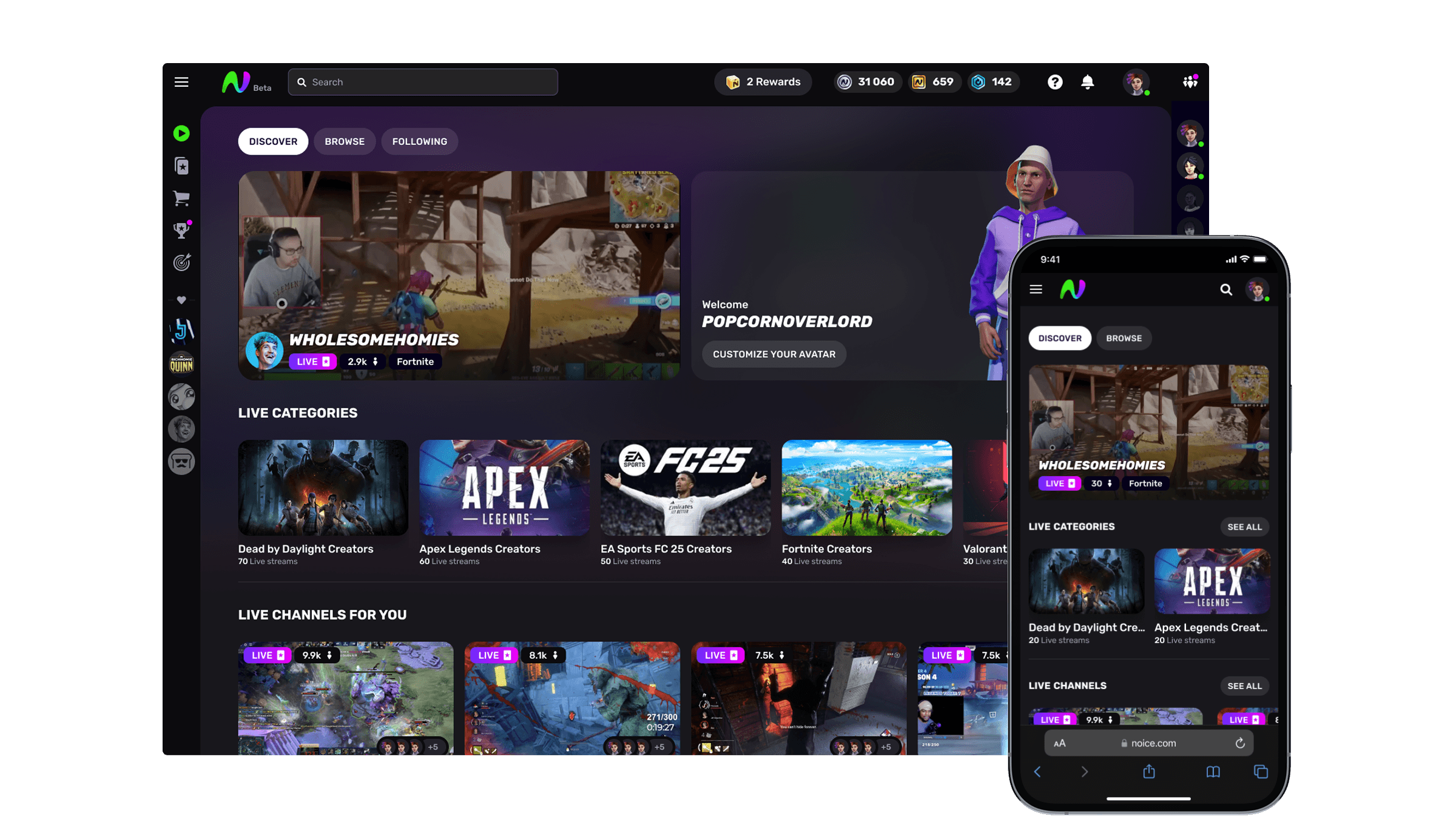
Noice launched in 2023 as a live-streaming platform that turned passive watching into a game. Viewers could follow their favourite creators and play along by predicting actions in real time.
What I worked on
I owned the end-to-end design process from discovery and concept exploration to ongoing stakeholder alignment and iterative improvements across live releases.
UI & UX
Conceptualisation
Design system
Prototyping
The challenge
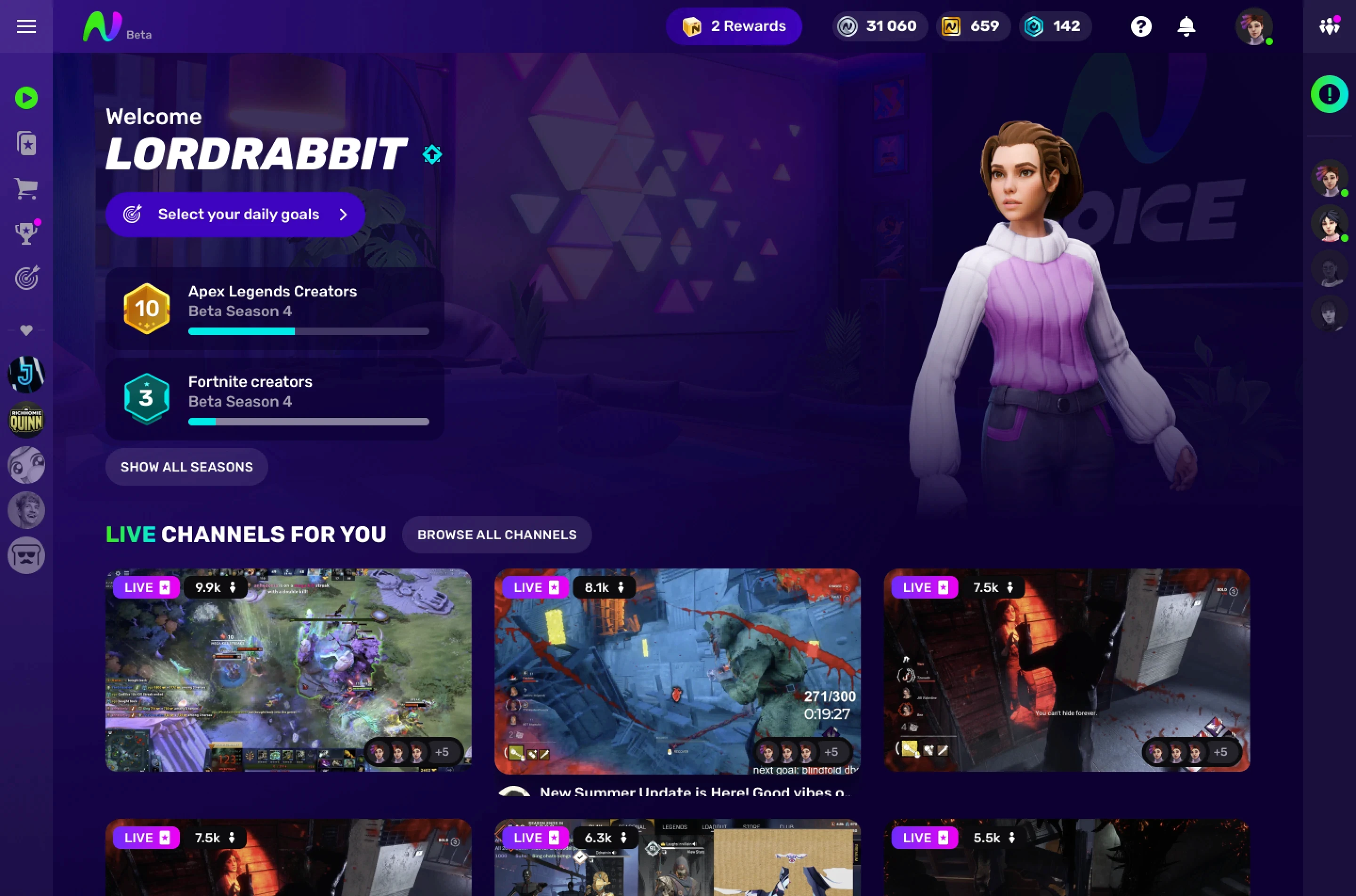
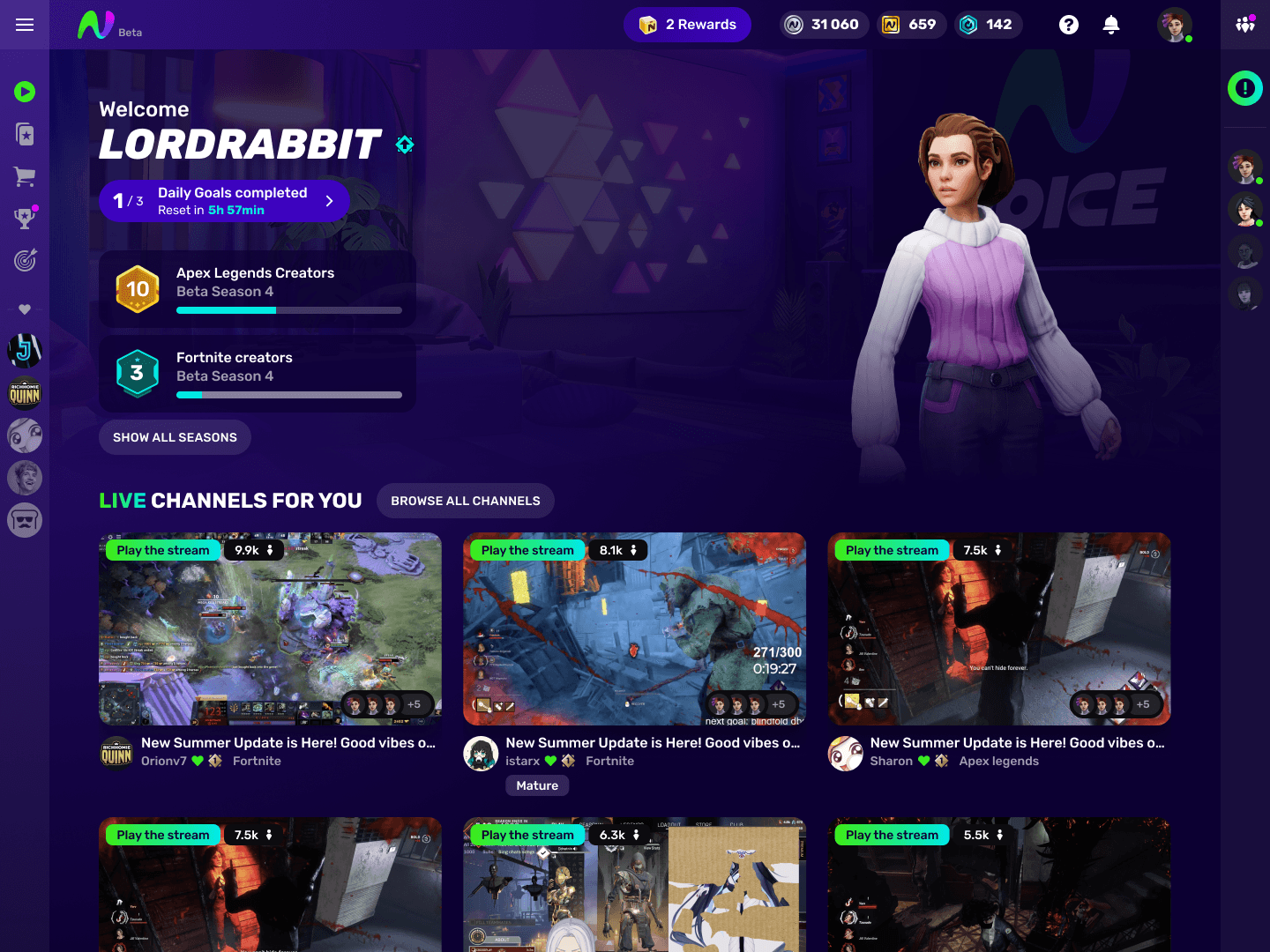
As Noice grew, the home view got cluttered. New users struggled to discover creators, and creators struggled to reach an audience. I redesigned content discovery through multiple iterations, focusing on mobile-first usability, scalability, and true to Noice’s game-first identity.
Outcomes
Greater Visibility for Creators
Improved discovery flows gave smaller creators a clearer path to being found, creating a more balanced and fair visibility across the platform.
More Intuitive Discovery Experience
By leaning on familiar patterns while preserving Noice’s game-first identity, discovery became easier to understand and faster to adopt—especially for new users.
Scalable Foundations
A modular Information architecture and reusable component reduced complexity, supported faster releases, and provided a stable base for future features and growth.
Analysing user request and feedback from the community
I analysed the user session data from our closed beta and reviewed the community feedback shared on our Discord channel.
~60% Mobile visits
~60% of traffic came from mobile, where the poor UX caused high drop-off.
Hard to find new creators
Users expressed a need for better discovery tools, specifically requesting search.
No familiar patterns
Users expected certain functionalities to behave the same way they do on other platforms.
Low category visibility
The categories page received only ~10% of visits, limiting discovery of new creators and content.
Hard for new creators to get discovered
New creators struggled to grow and discover organically.
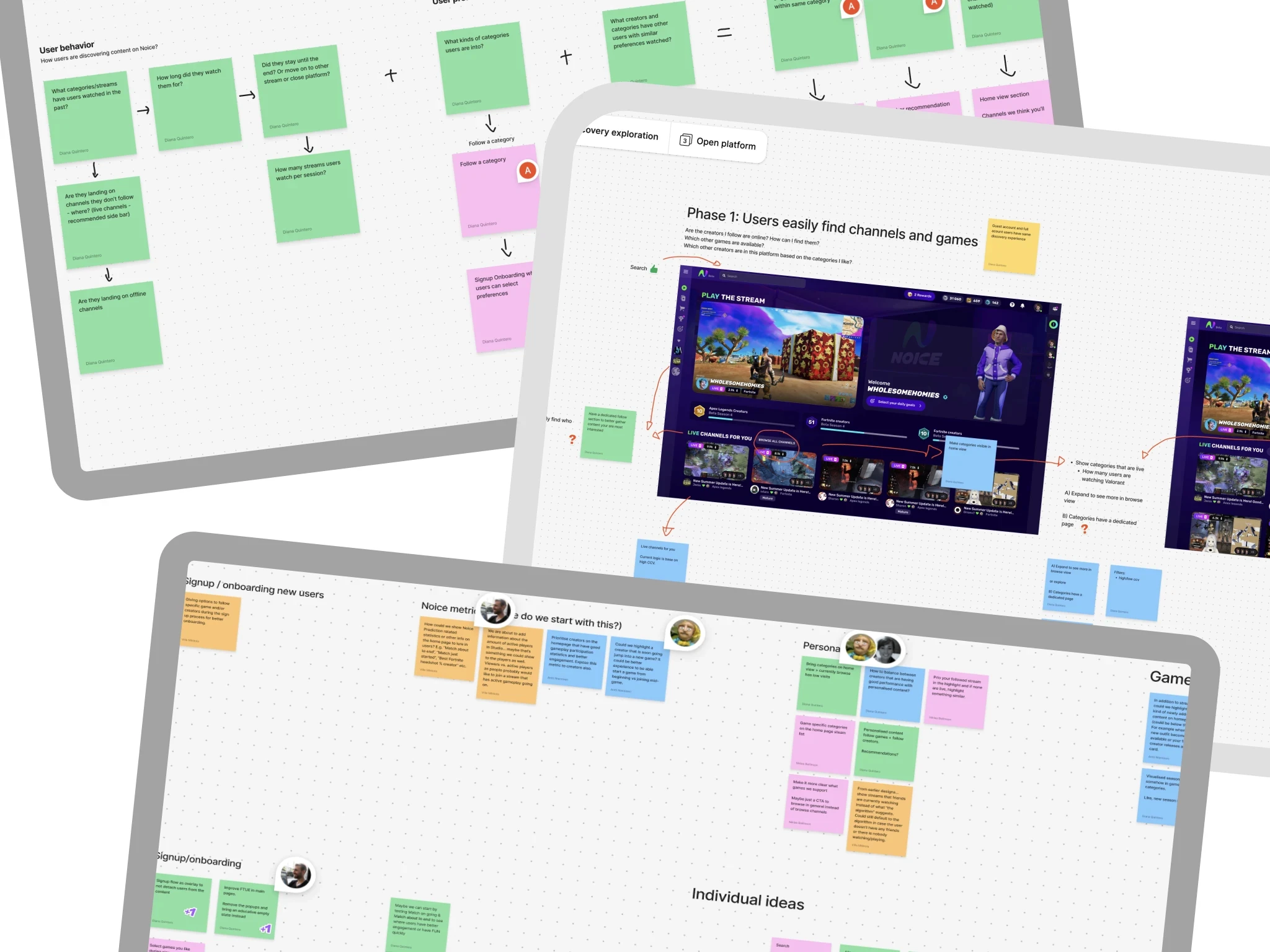
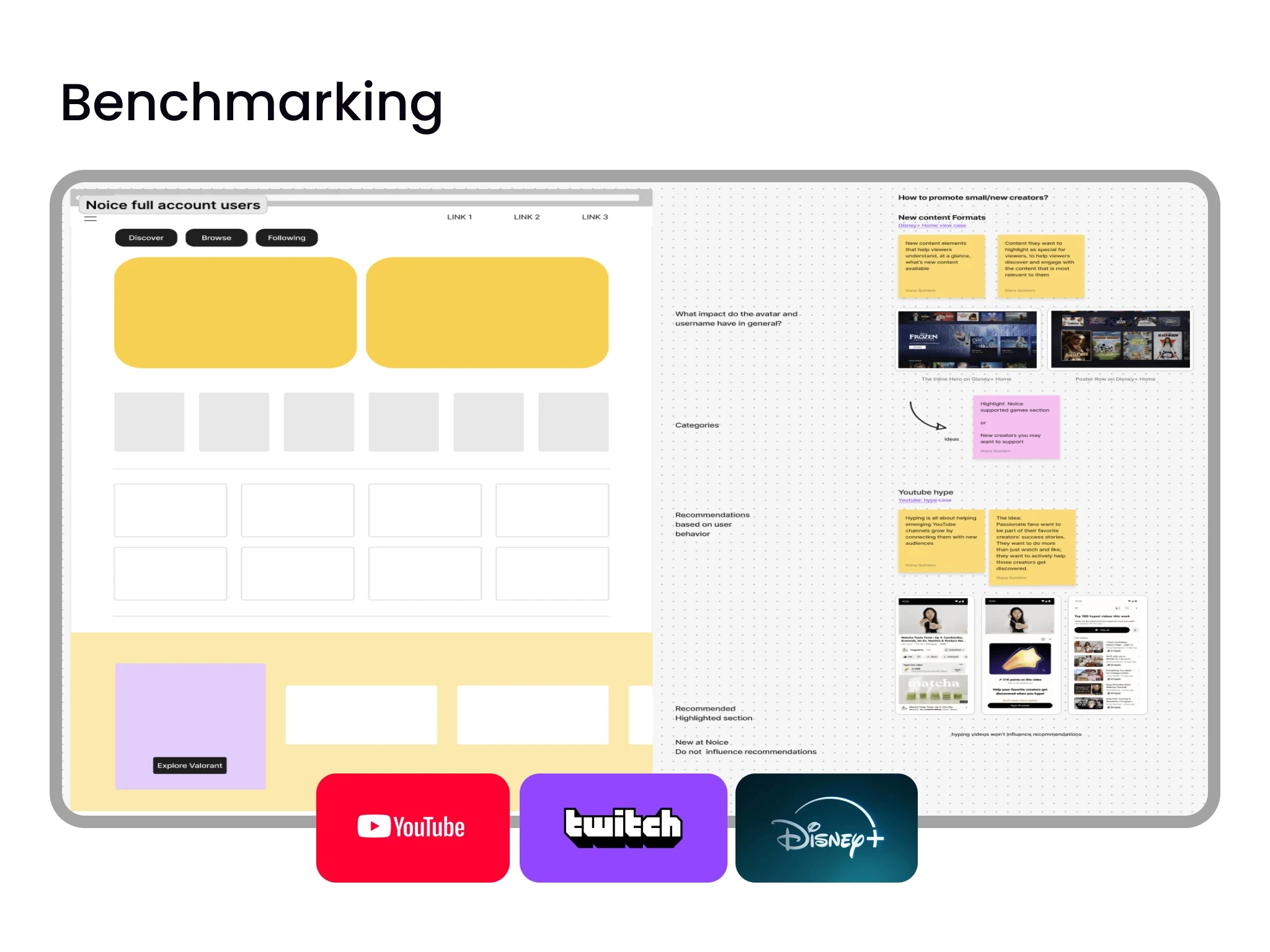
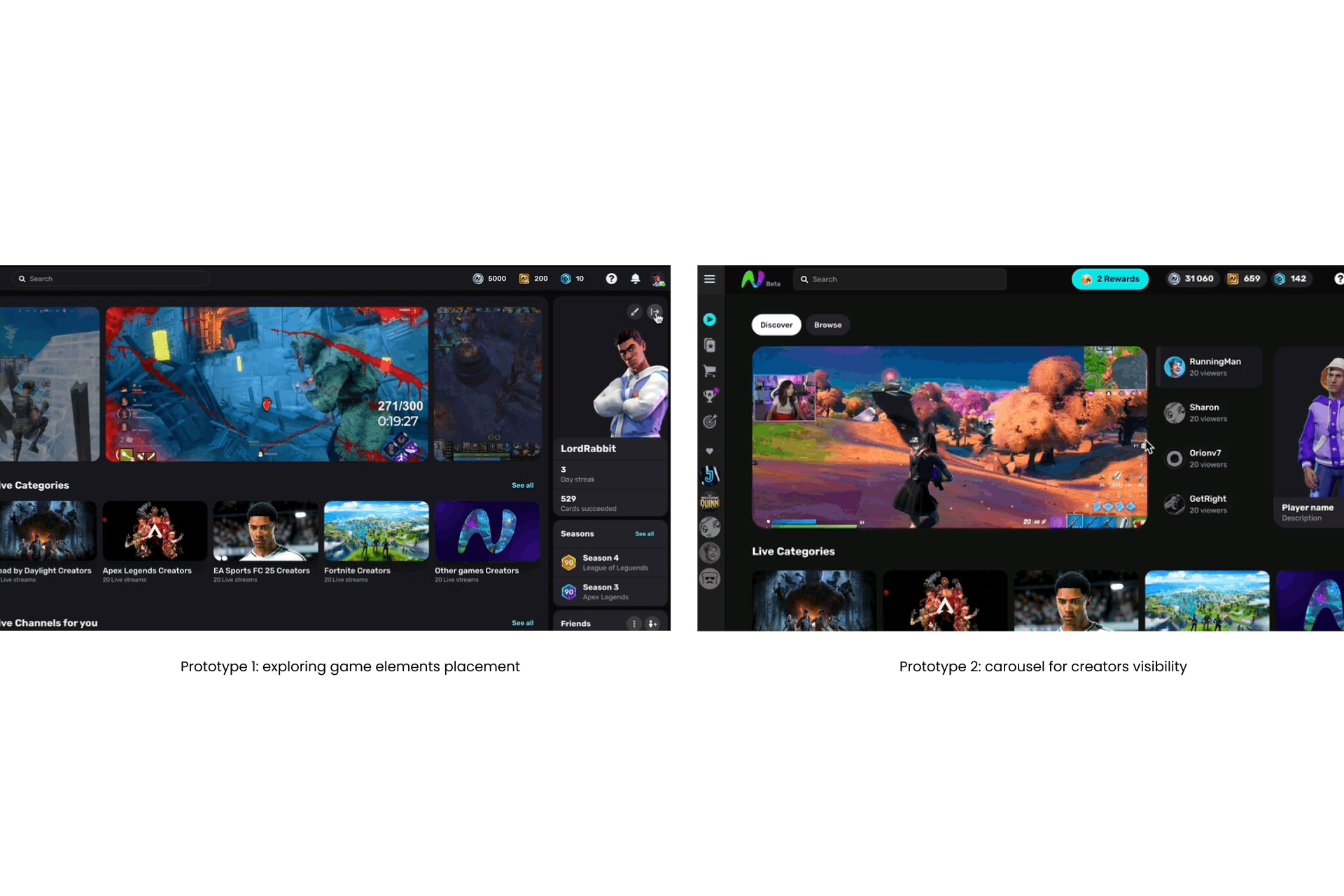
Ideation and collaboration
Throughout the process, I worked closely with the UX Lead to keep every concept aligned with our design vision and strategy.
Together, we refreshed the UI palette by lowering saturation to achieve a more balanced and neutral tone. In the end I designed the flows and interactions, while my colleague refined the brand and UI visuals.
The design
Every design decision focused on reducing friction, helping creators get discovered, and making content easier to find.
I reworked navigation, clarified the content hierarchy, and introduced features that highlight creators. The result is an updated look and feel that stays true to Noice’s game-first identity while making discovery more intuitive and scalable.
Key improvements included:
Clearer, More Familiar Navigation
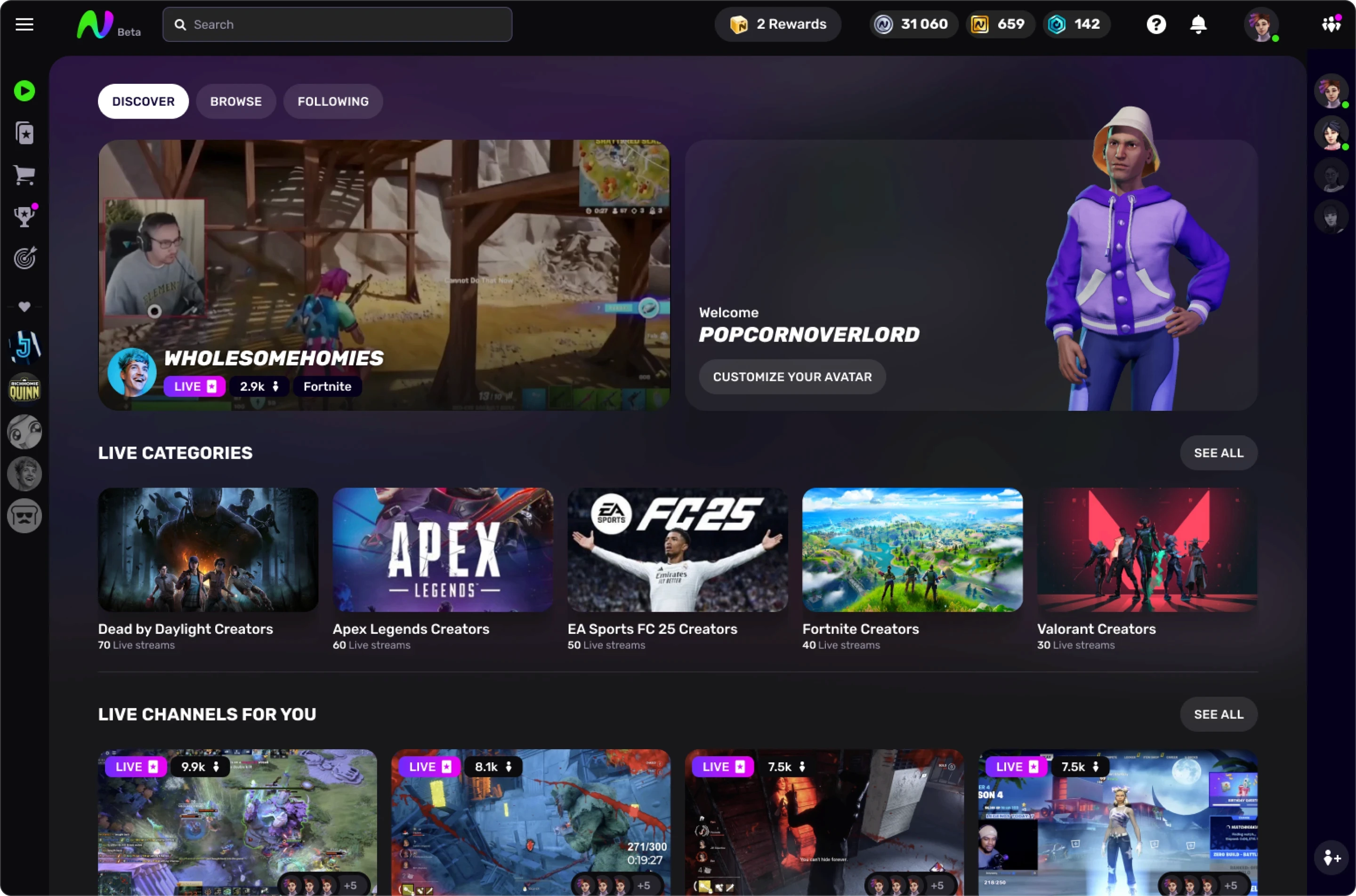
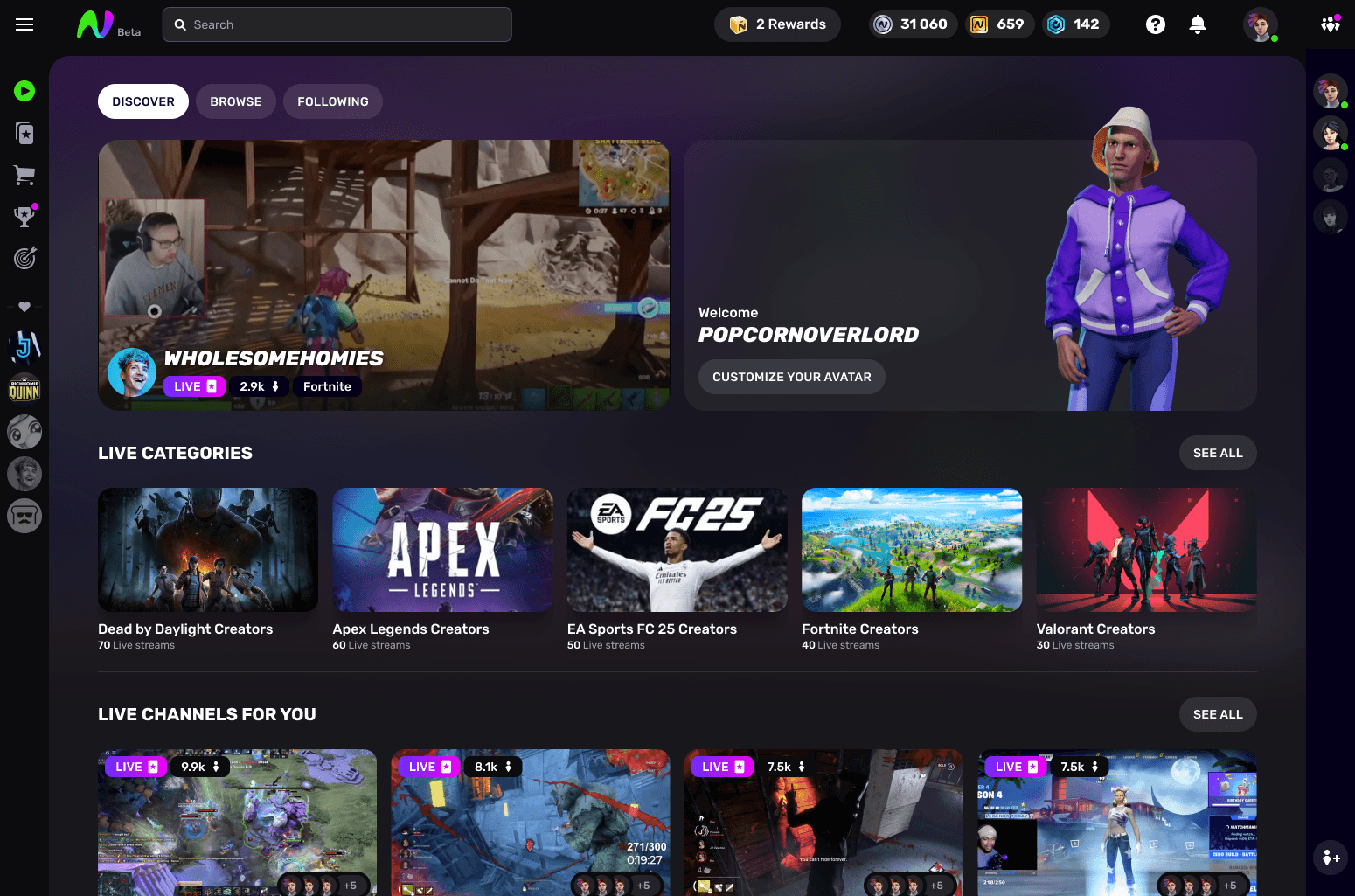
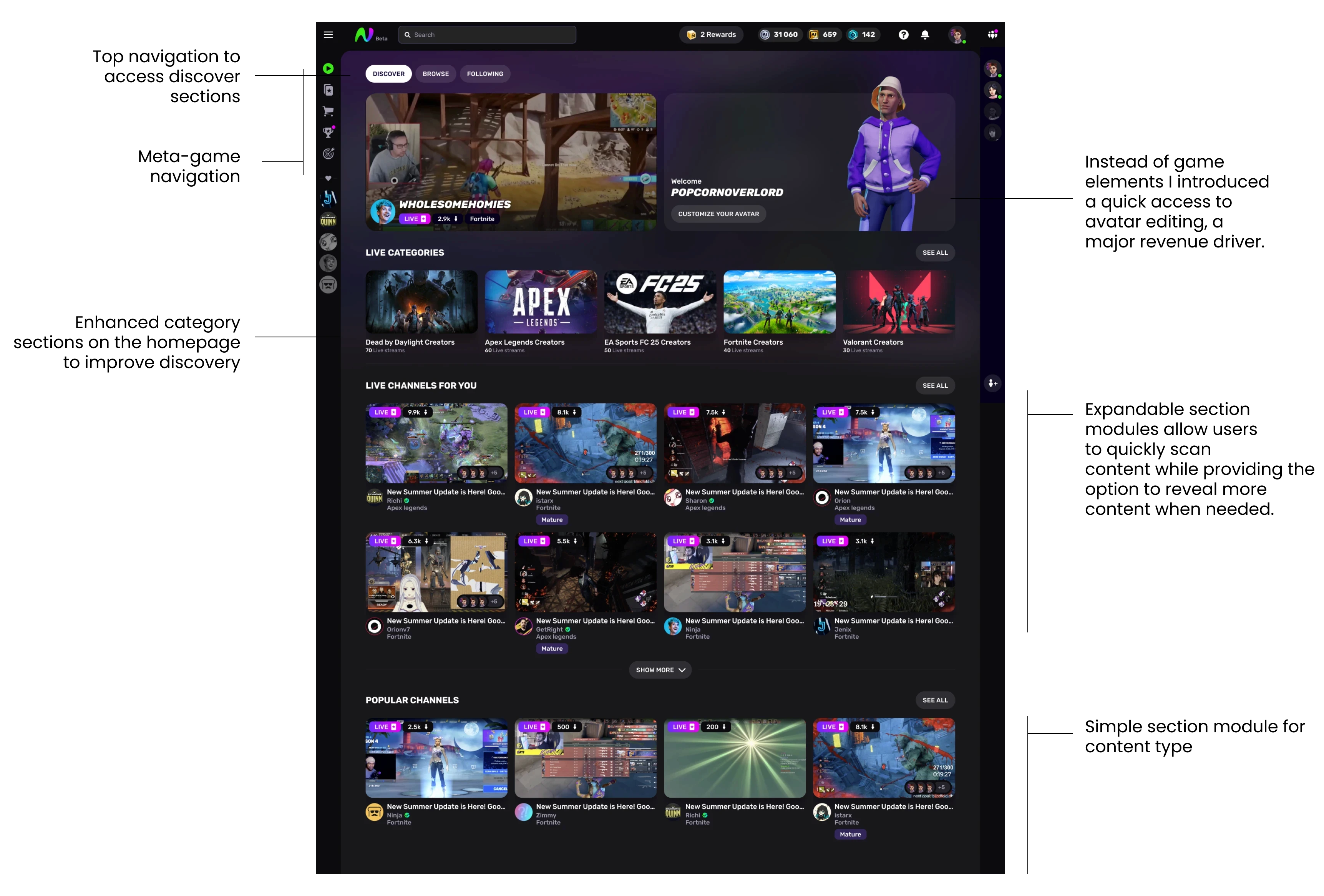
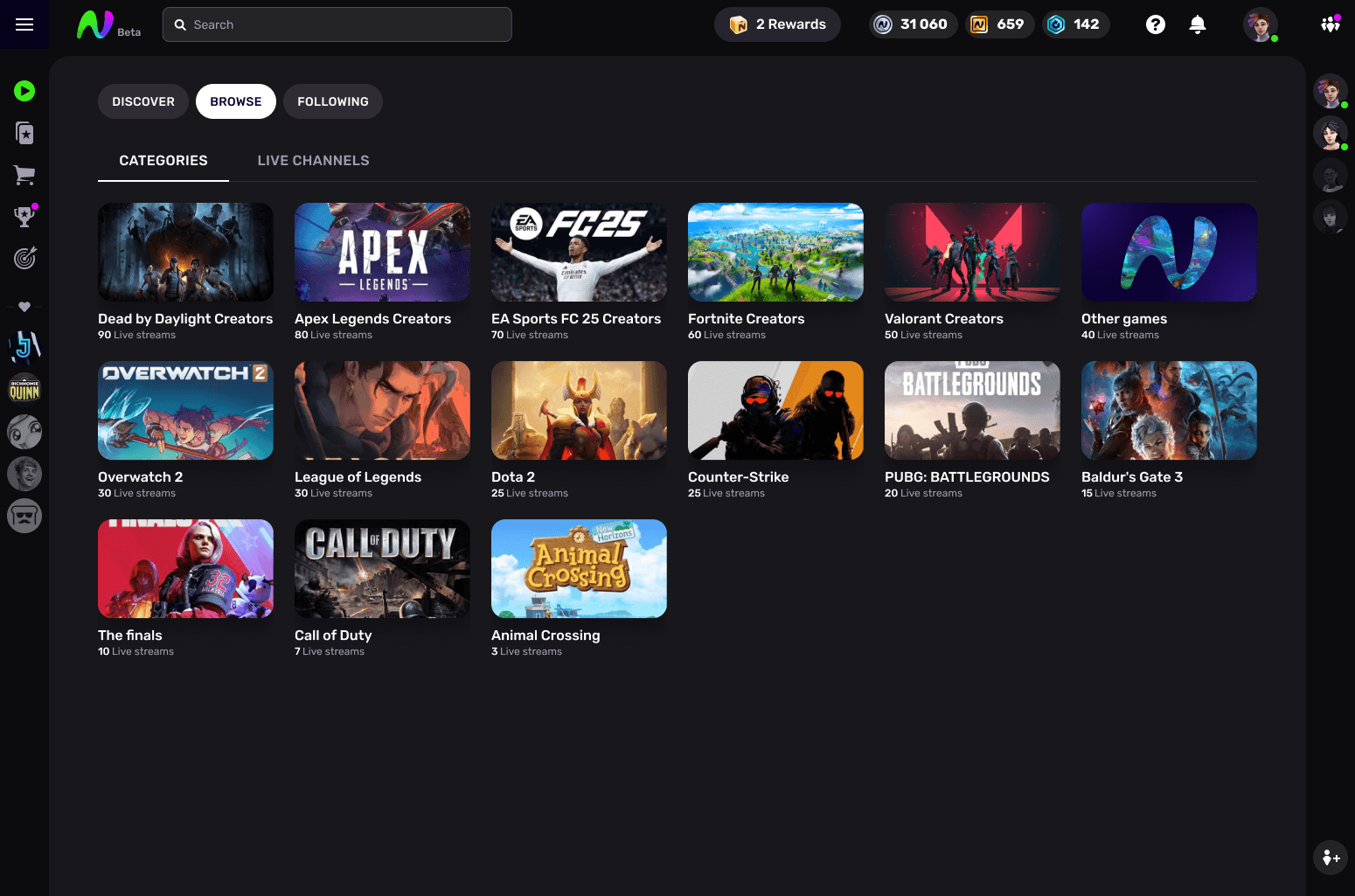
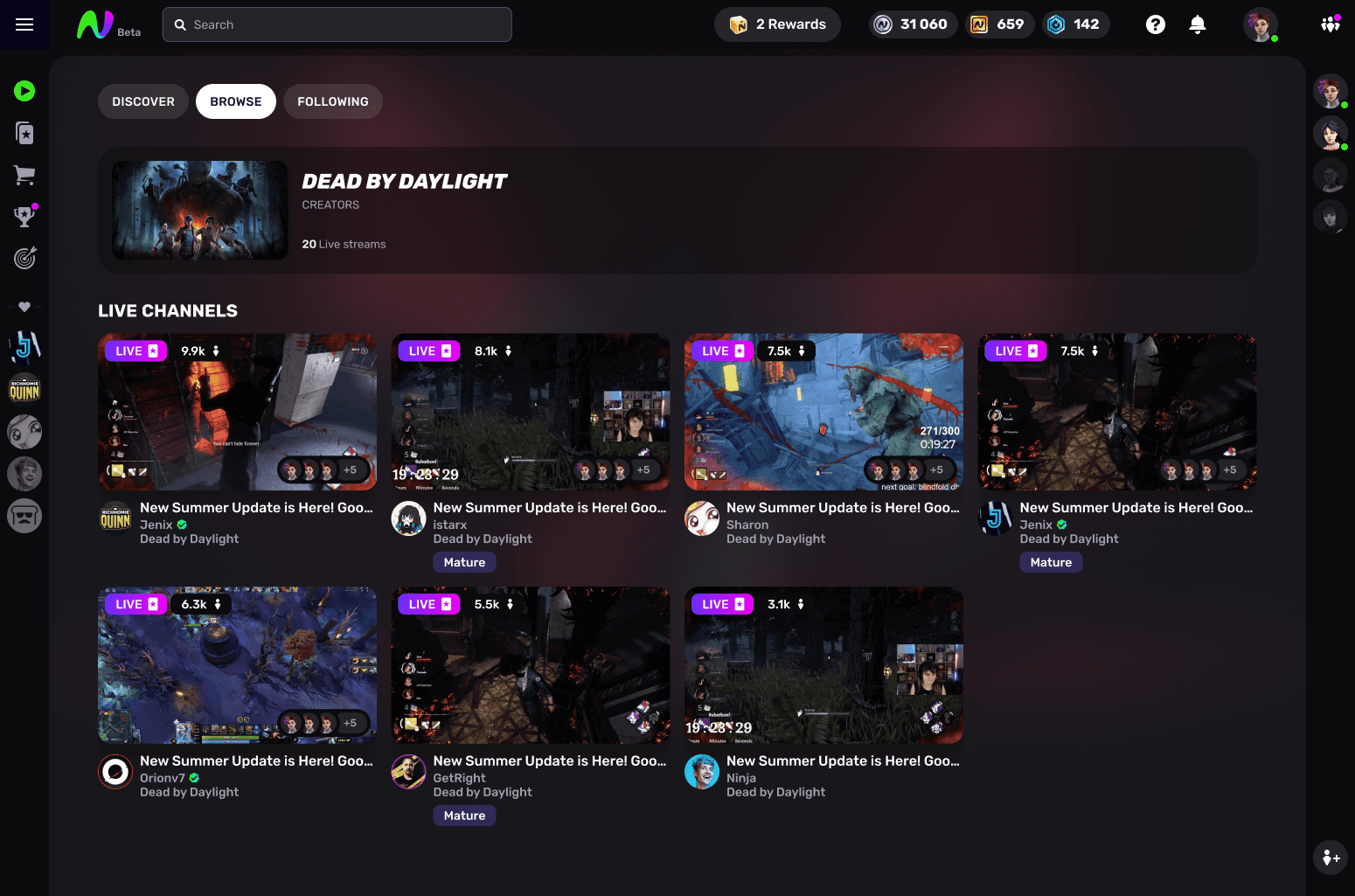
To support Noice’s growth in open beta, I restructured the navigation into Discover, Browse, and Followed. By leaning on modular components and familiar UI patterns to help users find content quickly without overwhelm.
Visual-first categories cards
Category section was redesigned to feature imagery and relevant details at a glance, prioritising visual discovery.
Balancing differentiation & Familiarity
Ensuring the product feels distinctive without compromising user expectations.
Phase 1
Familiar navigation tabs help users find what they want faster
By removing game features and introducing familiar navigation patterns, the new design makes it easier for users to discover content, reducing the risk of losing or frustrating players right from the start.
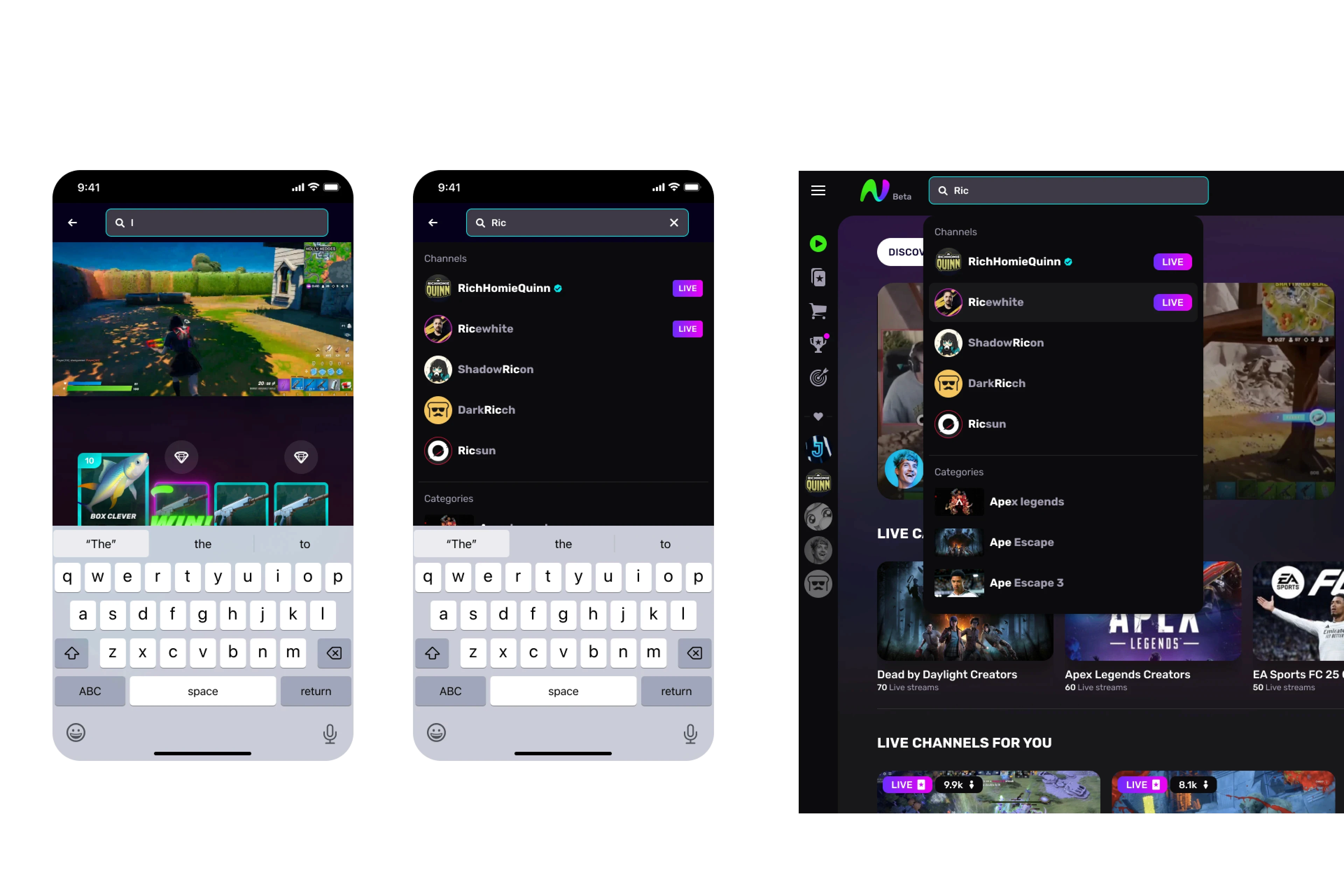
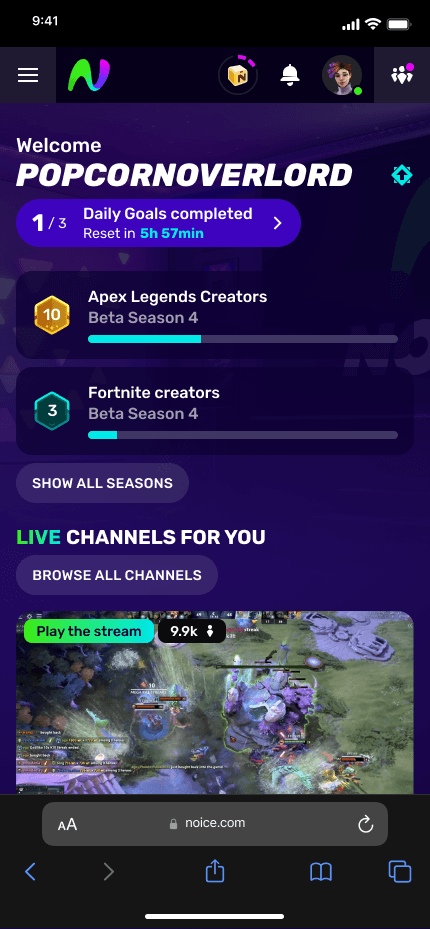
60% of Web mobile users now explore without friction
With over 60% of users landing on mobile web, I focused on responsive layouts and touch-friendly interactions to improve accessibility and usability.

Driving engagement by highlighting active prediction games
By highlighting streams with active prediction games and engaged viewers, we make it easy for new users to jump in, learn the game, and join the fun.
This approach not only spotlights creators but also balances content discovery with gameplay, creating a more engaging and social experience.

Making sure the new version works well
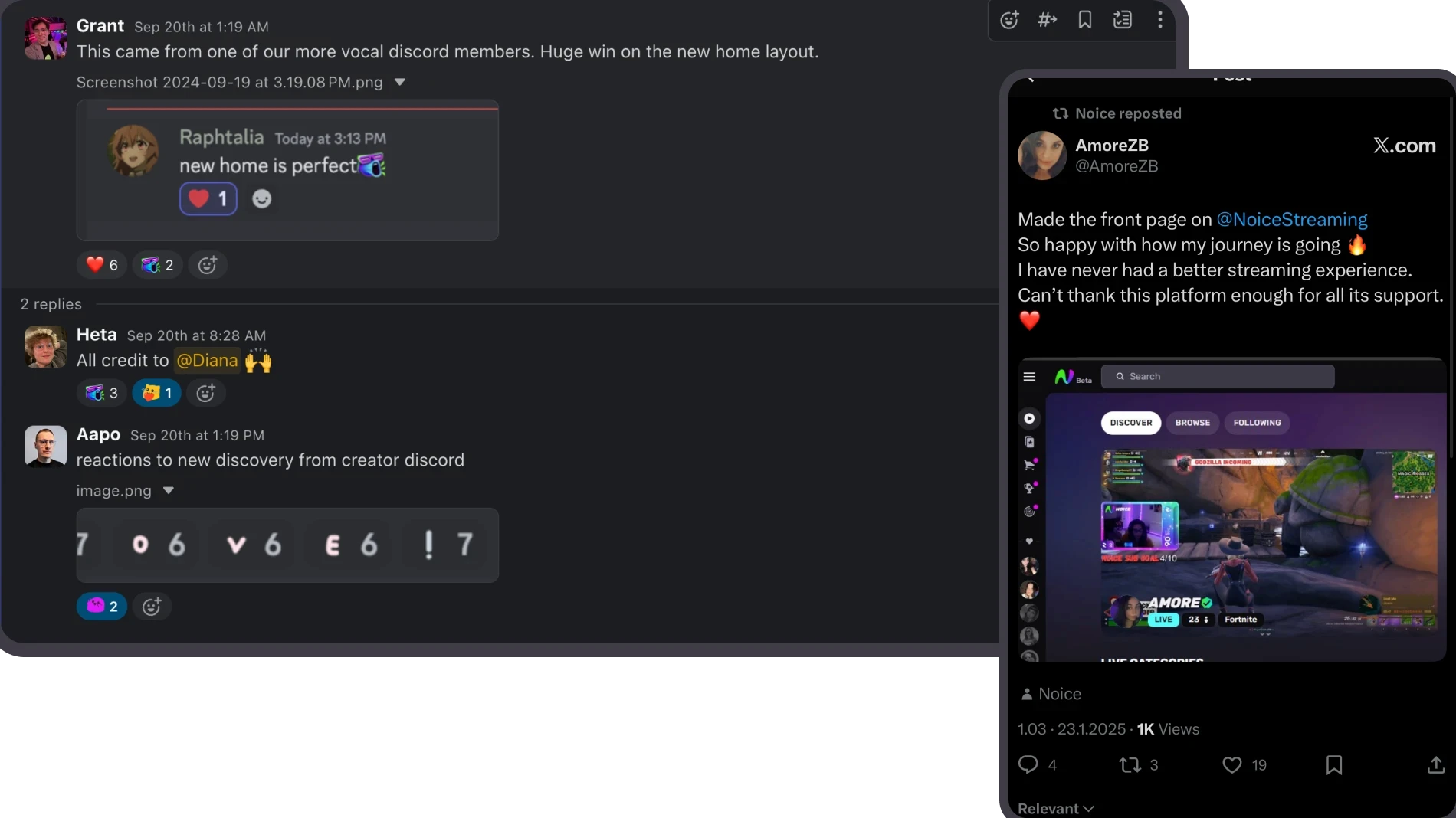
After the new version rolled out, we started collecting user feedback and data to monitor main metrics.
Phase 2
Helping users discover more creators where they already engage most
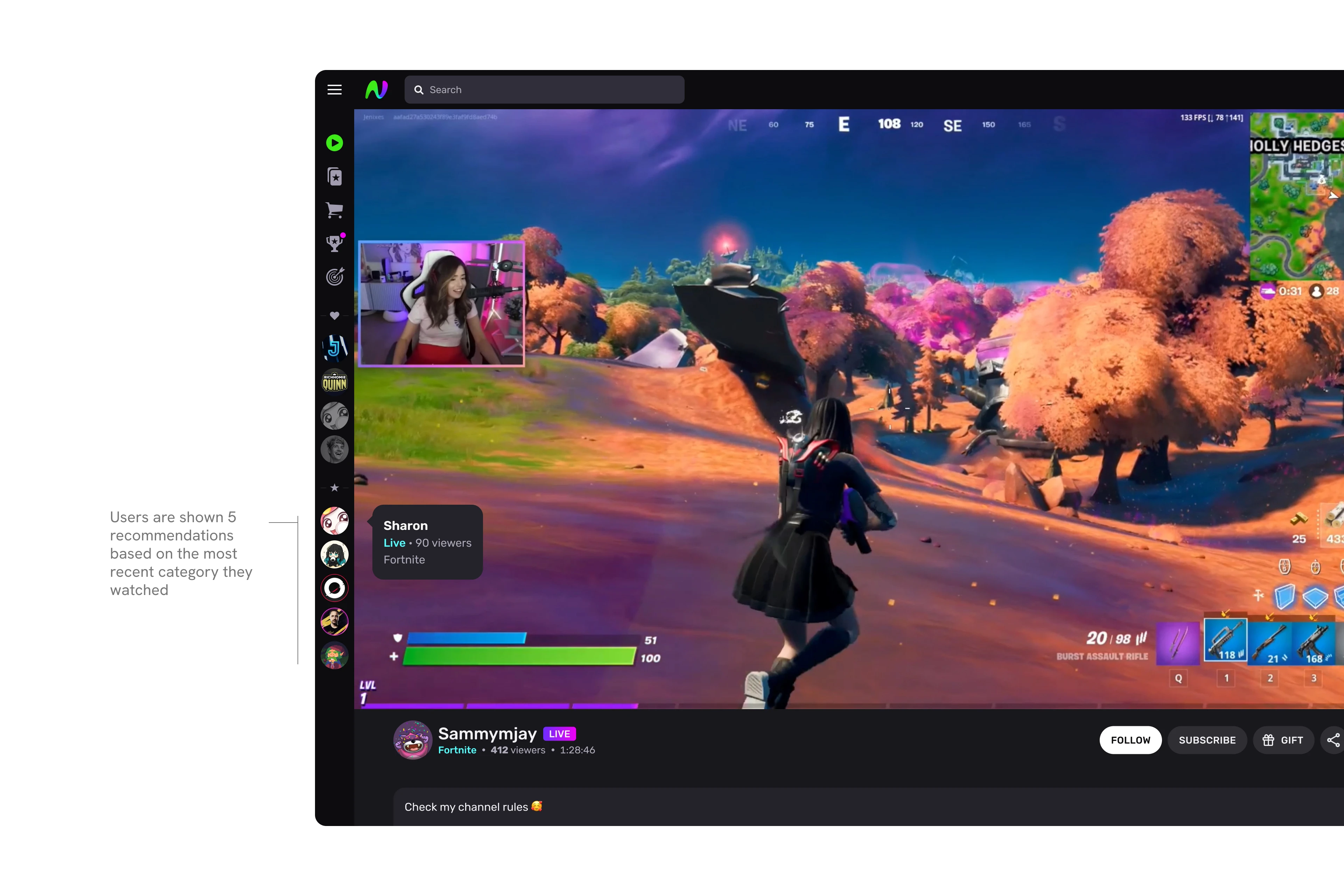
Because the left sidebar already performed well, I tested adding creator recommendations to see if it could boost content discovery.
The results were positive, users clicked these recommendations more than homepage streams, and viewers were more likely to explore from the sidebar than return to the homepage.
Working to and extending the design system
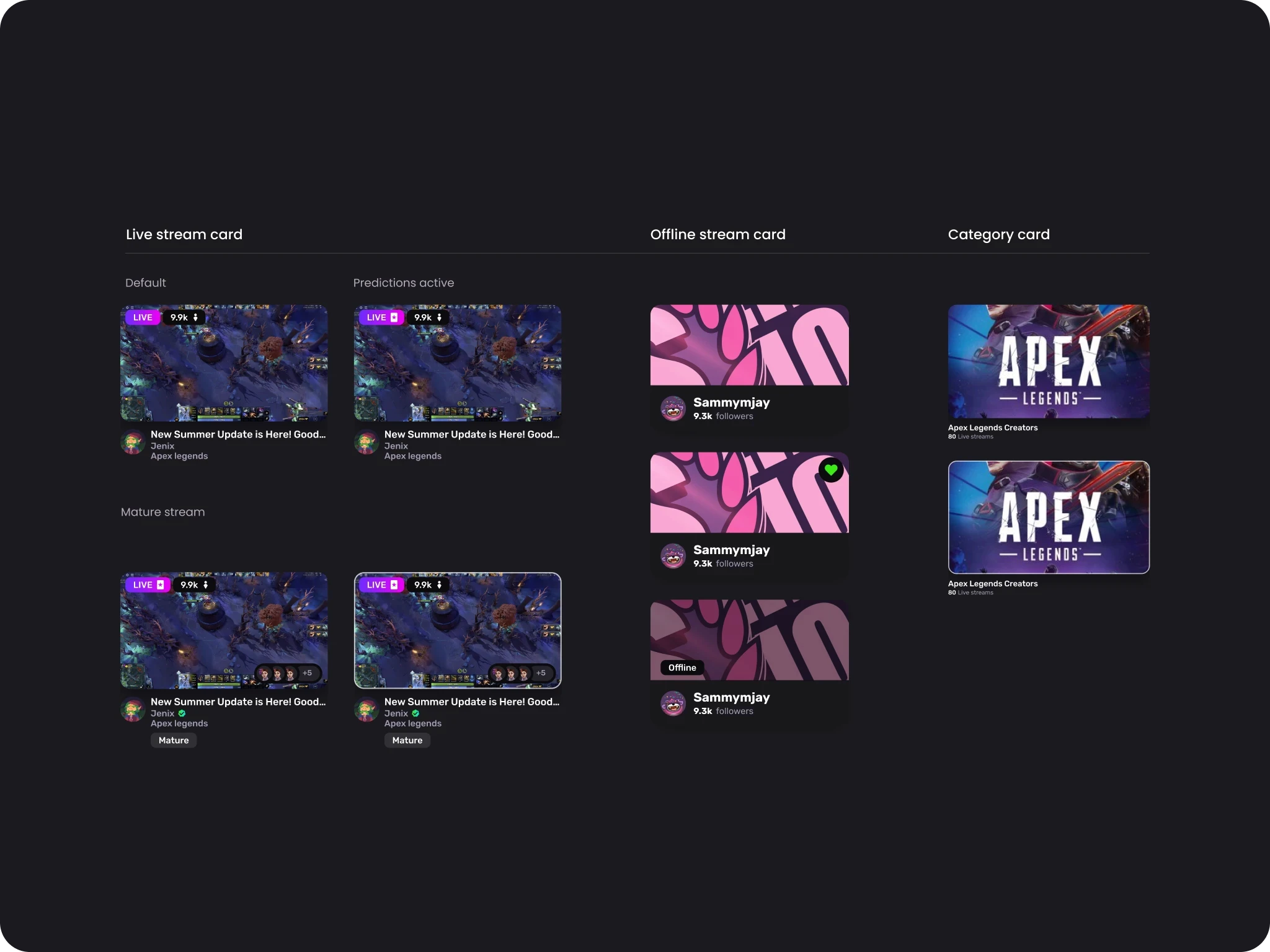
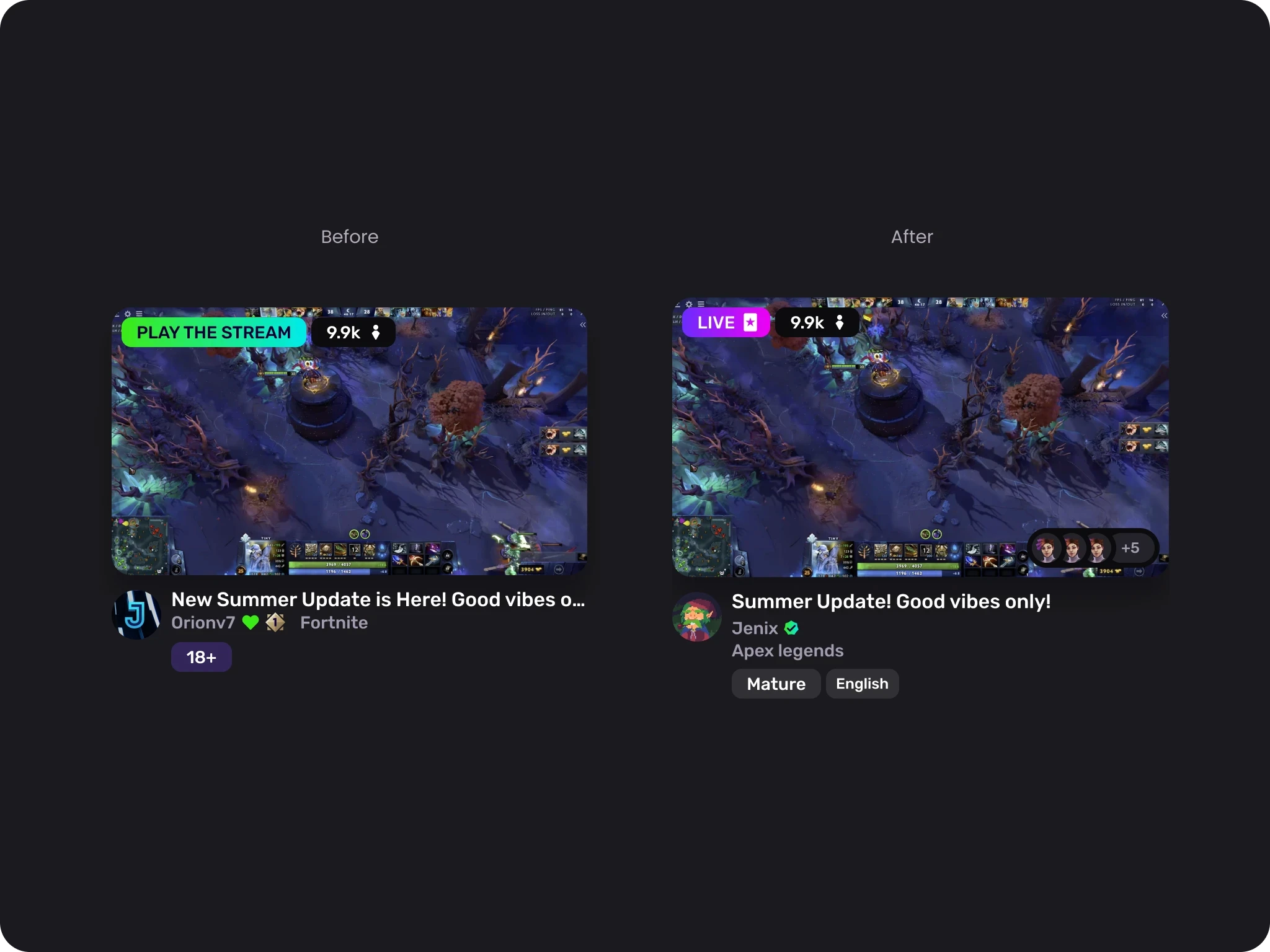
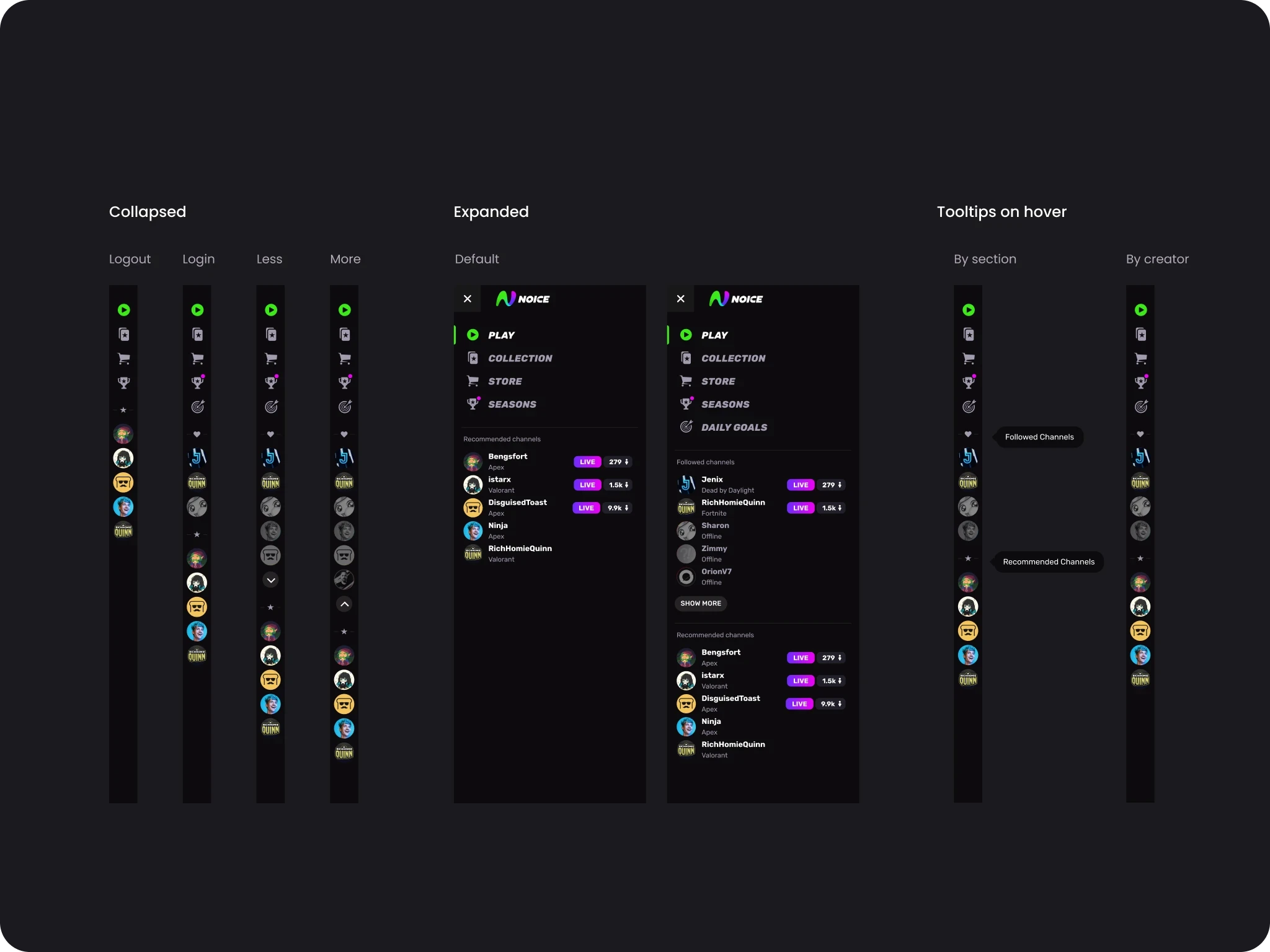
Together with developers, I updated and refined components. In our weekly design-system sessions, we reviewed changes, shared feedback, and planned next steps to keep the system consistent and scalable.
Learning
Balancing long-term vision with iterative, scalable solutions. Early exploration of multiple options keeps me ready for change.
This project gave me the opportunity to work closely with leadership across teams, align stakeholders, and ensure that our designs were both user-centered and aligned with business goals.
Combined quantitative data with qualitative feedback to uncover why users behave as they do and make stronger design decisions.